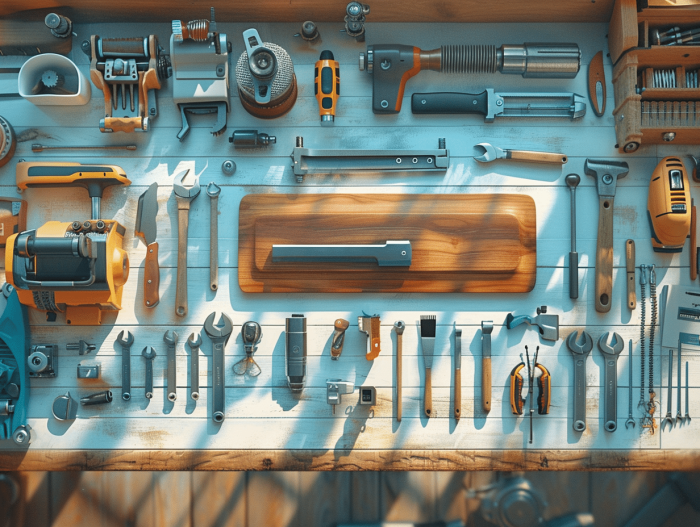
When it comes to tackling DIY projects with efficiency and precision, a range of tools proves essential. Among them, the angle grinder holds a prominent place. This power tool comes in several variants, tailored for specific uses. Whether it’s for cutting, grinding, deburring, or sanding various materials like metal, stone, or concrete, the angle grinder is an invaluable aid. Its versatility makes it a significant ally for DIY enthusiasts, whether they are beginners or experienced, eager to achieve professional-quality results.
The angle grinder, a versatile tool for your DIY projects
In the DIY arsenal, the angle grinder stands out for its ability to tackle a multitude of challenges. What is an angle grinder used for? This tool, practical for various DIY tasks, easily handles the toughest materials. Whether it’s steel, concrete, or stone, the angle grinder shapes them according to the user’s needs. Its design, featuring a powerful motor block, a head equipped with a spindle, and a fixing flange, gives the angle grinder a prominent place in power tools, alongside the drill driver or circular saw.
The market offers a varied range of angle grinders, notably the angle grinder, known for its versatility. Technical characteristics such as power, which can range from 500 to 2500W, and the disc rotation speed, sometimes reaching up to 11000 RPM, demonstrate this tool’s ability to adapt to the demands of DIY work. These technical attributes ensure optimal performance and adaptability for multiple uses, thereby enhancing the efficiency and precision of cuts.
Beyond the basic specifications, the angle grinder can be equipped with options and accessories that enhance its user comfort and safety. Anti-vibration handles, speed controllers, a dust extraction system, and a cooling system are features that transform the DIY experience. Safety is not overlooked, as the tool can incorporate devices like spindle lock and unlock mechanisms, ensuring risk-free handling for the operator. The angle grinder asserts itself as an indispensable tool, combining robustness and safety to effectively meet various DIY project needs.

How to choose the right angle grinder for your needs?
Choosing an angle grinder first involves understanding the scope of your DIY projects and the materials you plan to work with. The power of the angle grinder, ranging from 500 to 2500W, directly impacts its ability to cut through steel or polish concrete. Higher power will be preferred for intensive and regular tasks, while for occasional jobs, a less powerful grinder may suffice. The disc rotation speed, on the other hand, determines the finesse and speed of the cut, with models ranging from 5000 to 11000 RPM.
Safety equipment is a decisive criterion in choosing an angle grinder. Elements such as a disengagement system, a no-restart device, or a ‘dead man’ emergency stop control are essential guarantees to prevent accidents. These features protect the physical integrity of the user when operating this powerful and potentially dangerous tool.
Outillage 2000, by providing a buying guide, informs about the various types of angle grinders, as well as the options and accessories that can accompany this power tool. From anti-vibration handles to dust extraction systems, and speed controllers, these complementary features optimize the use of the device and increase comfort. A thorough understanding of these specifics facilitates the choice of an ideal angle grinder for your projects, making it both efficient and tailored to your specific needs.