Measuring your waist without a measuring tape is a more common situation than it seems. Whether it’s for an online clothing purchase, adjusting a sewing pattern, or tracking health at home, the need often arises when the measuring tape is nowhere to be found. Alternative methods exist, but their reliability varies depending on the intended goal, whether it’s choosing the right size of pants or monitoring a cardiometabolic indicator.
The acceptable margin of error depends on what you are looking for
Before wrapping a string around your waist, a distinction must be made. When ordering a dress or pants online, a difference of one to two centimeters often goes unnoticed thanks to size charts that cover ranges. For an adjusted sewing pattern, this same margin can compromise the final fit.
In terms of health, the question arises differently. The WHO and the European Society of Cardiology (ESC Guidelines 2021) consider that the change in waist circumference over time matters more than absolute precision. Using the same improvised tool, such as a belt set to the same notch, is enough to spot a trend.
This approach has gained traction since the COVID-19 pandemic, with a documented increase in self-measurement of anthropometric data at home, particularly in Europe and North America.
To know your waist size without a tape measure, you must first calibrate your expectations according to the intended use.
String, charger cable, and shoelace: measuring your waist with a flexible link
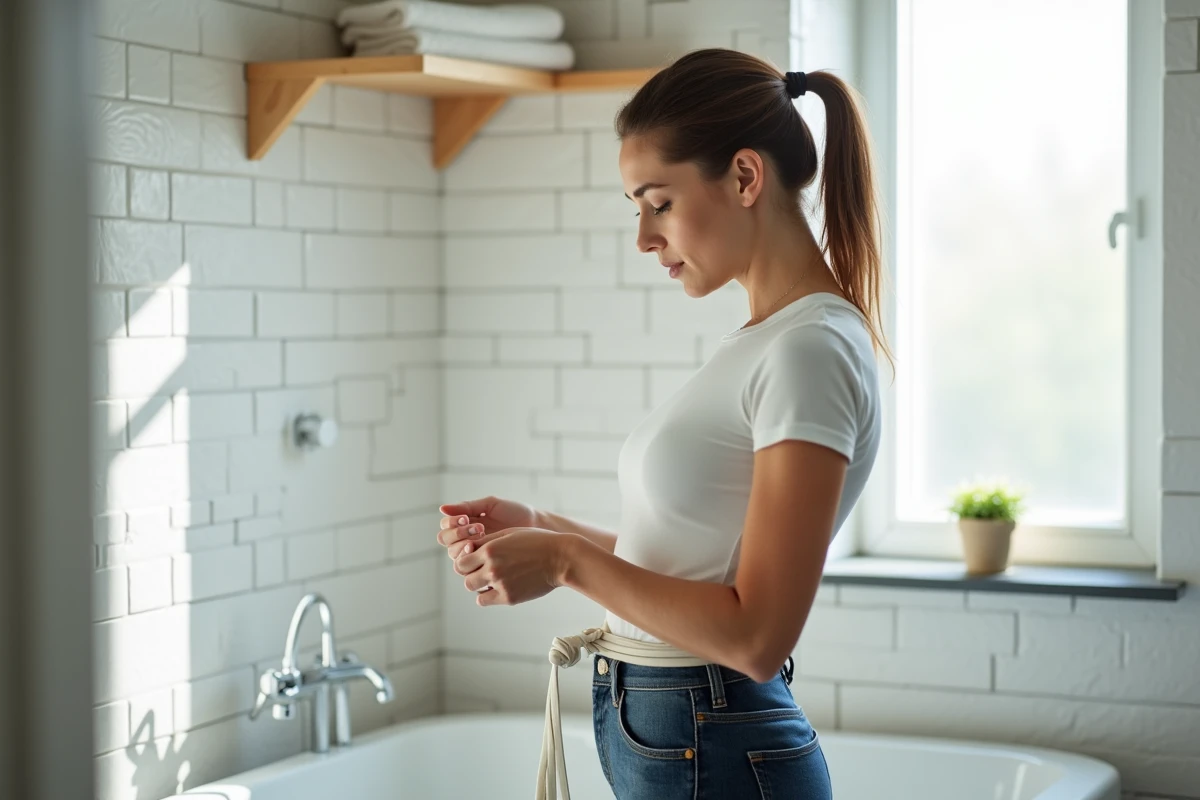
The most common method involves wrapping a flexible link around the waist, marking the junction point, and then transferring the obtained length to a ruler or reference object. The principle is simple. Execution requires some precautions.

- The chosen link (kitchen string, shoelace, sweat cord, USB cable) should not be elastic. An elastic thread distorts the measurement by several centimeters depending on the tension applied.
- The correct placement is at the narrowest point of the torso, usually between the bottom of the ribs and the navel. Measuring above or below this area yields a result that does not correspond to either sewing measurements or health indicators.
- Keep the link flat against the skin, without tightening it to the point of compression, nor allowing it to float. A good indication: you should be able to slide a finger between the link and your body.
- Transfer the length to a rigid ruler. If you only have a 30 cm ruler, mark the string at each segment and add them up.
Cutting the string at the junction point rather than holding it with your fingers reduces the risk of approximation. This detail can change the result by one to three centimeters according to field feedback.
Waist size and clothing size: the conversion that traps
Obtaining a measurement in centimeters is not always enough. Size charts vary from brand to brand, and the correspondence between measured waist circumference and size displayed on the label remains a slippery ground.
A pair of pants labeled “size 40” from one manufacturer may correspond to a different actual waist size than that of another manufacturer for the same label. Brand-specific size guides, available on their websites, remain the only reliable reference. The number measured on your body is just a starting point, not a size guarantee.
For sewing patterns, the issue arises differently. The measurements indicated on a pattern correspond to standardized body measurements, not to finished garment dimensions. Taking your measurements with kitchen string and then comparing them to the pattern chart works, provided you measure exactly at the points indicated by the pattern (natural waist, low waist, hip circumference).
Mobile apps for measurements by photo: promises and limits
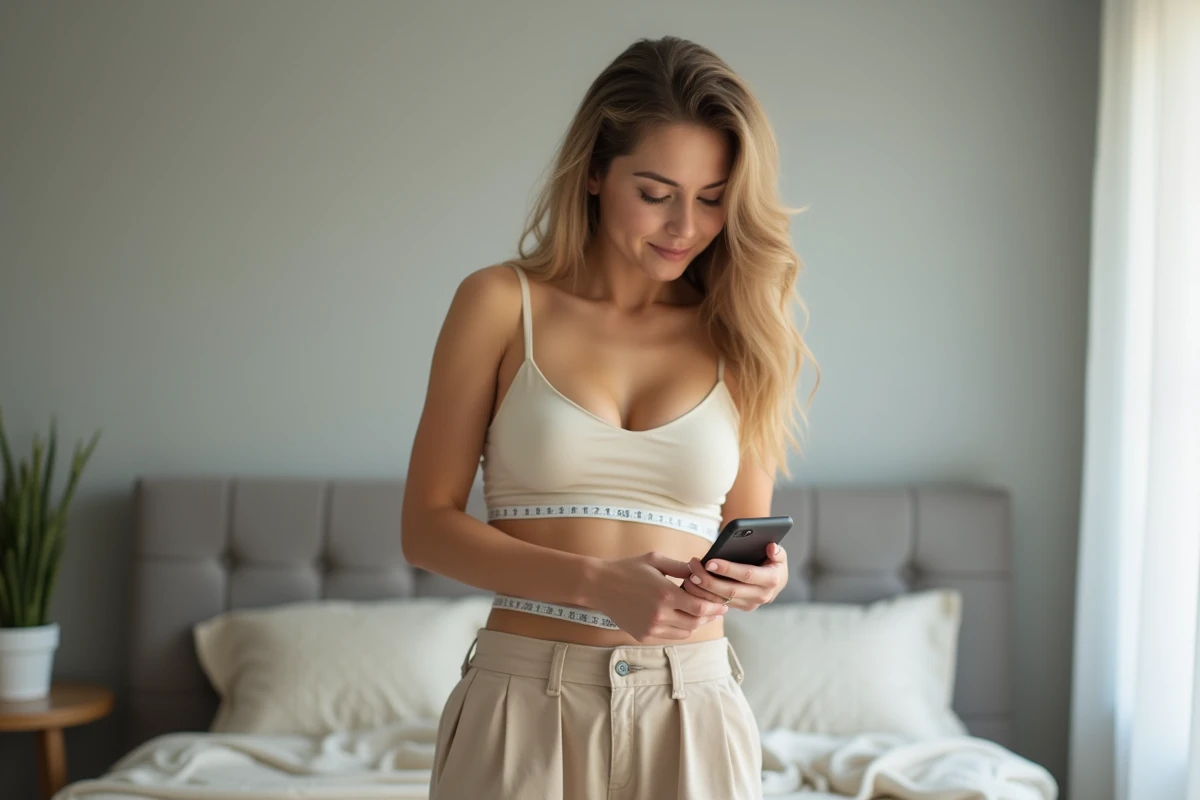
Several apps (MySizeID, 3DLook, Nettelo) offer to estimate waist size from two or three photos of the body taken with a smartphone. The process takes less than a minute and requires no accessories.
These tools claim their accuracy is sufficient for clothing selection, according to internal validations published by these companies between 2022 and 2024. However, none of these validations come from large-scale independent studies. Reliability depends on factors that are difficult to control: lighting quality, posture during the photo shoot, type of clothing worn at the time of capture.
For online clothing purchases with a return policy, the risk remains limited. For monitoring metabolic health or a custom sewing pattern, these apps cannot replace a physical measurement, even an approximate one.
The belt as a tool for regular waist tracking
Among alternative methods, the belt worn daily has an advantage that others do not: consistency. The same object, worn in the same place, tightened to the same notch, provides a stable reference over time.
One notch on a belt corresponds on average to two and a half centimeters, making significant variations in waist size perceptible over several weeks or months. This is precisely the type of longitudinal tracking that the WHO and ESC recommendations value for assessing cardiometabolic risk.
This method does not provide a usable number in centimeters for ordering pants or adjusting a pattern. It meets a different need: detecting a trend rather than measuring an absolute value.
The choice of method therefore depends entirely on the question being asked. A cut string transferred to a ruler remains the most versatile solution for obtaining a usable number. A photo app can help for an online purchase. A regularly worn belt serves as a health indicator over time. None of these approaches match a measuring tape for raw precision, but each covers a use that the measuring tape, when missing, leaves orphaned.