
You finish your workout, grab a bottle of Powerade, and the sweet-salty taste does its job. The drink is designed to replenish water and mineral reserves after prolonged exertion. But when this bottle becomes a daily reflex, even on days without physical activity, the composition of the drink plays a completely different role in the body.
What’s really in a bottle of Powerade
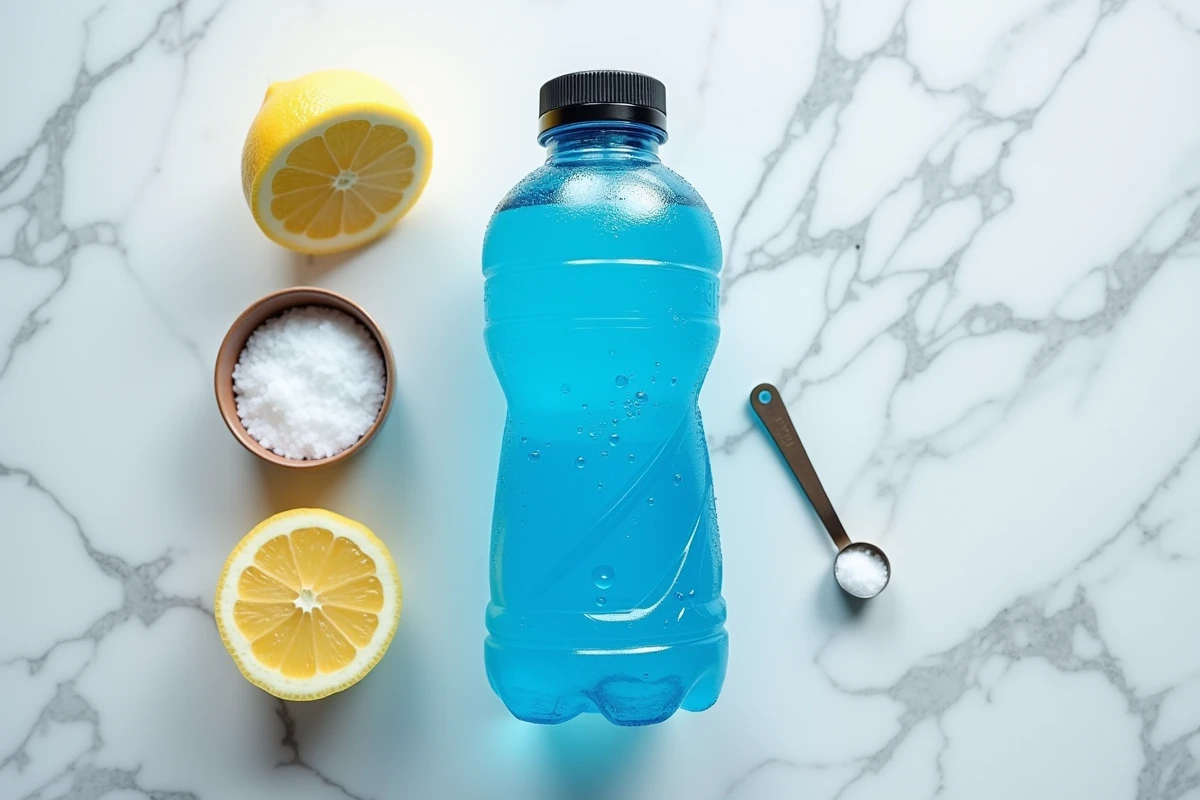
Powerade belongs to the family of sports drinks, not energy drinks. This distinction matters. No caffeine or taurine here, but a mix of water, sugars, electrolytes (sodium, potassium), and B vitamins.
The problem lies with the sugars. A standard bottle contains a comparable amount of free sugars to that of a regular soda. Outside of physical exertion, these sugars are stored, not burned. The added sodium, useful during sweating, becomes unnecessary when you are sitting at a desk.
To delve deeper into the issue, several reviews on Powerade and health detail this gap between the product’s formula and the actual usage by most consumers.
Powerade and sports effort: when the drink fulfills its role
During continuous exertion lasting over an hour, the body loses water, sodium, and glucose through sweat and muscle contraction. This is the scenario for which Powerade was formulated. The nutrition guide for athletes from the International Olympic Committee, with which Powerade has partnered for dissemination, confirms that nutrition around prolonged effort is a key performance factor.
Specifically, electrolytes facilitate water absorption at the intestinal level. Sugars provide quick fuel to the muscles. A cyclist riding for two hours in the heat gains real benefits from this type of drink.
Under an hour of moderate activity
For a walk, a yoga class, or a light weightlifting session, plain water is more than sufficient. The body does not need an intake of sodium or quick sugars under these conditions. Drinking Powerade in this case amounts to adding empty calories to a day already covered by regular food intake.
Risks of daily consumption without intense effort
Have you noticed that the feeling of thirst returns quickly after a sugary drink? Sugar calls for sugar, and salt calls for thirst. Drinking Powerade every day without corresponding physical expenditure creates a gradual imbalance.
Here are the main documented effects of regular consumption outside of a sports context:
- Gradual weight gain: unused free sugars are converted into fat, especially around the abdomen.
- Increased cardiovascular risk: chronic excess sodium contributes to elevated blood pressure, even in young people.
- Dental erosion: a review conducted by King’s College London highlighted a high prevalence of dental erosion and cavities among athletes regularly consuming sports drinks, due to the dual effect of fermentable sugars and acidity. In a non-athlete, the risk is the same without the performance benefit.
Sugar and acidity attack enamel with every sip, whether you are on a bike or on your couch.
Powerade for children and adolescents: a usage to avoid
This is probably the population most affected by misuse. Sports drinks attract young people with their taste and sports-related image, but the American Academy of Pediatrics has reaffirmed that these drinks are not necessary for children engaged in recreational activities.
Pediatricians now classify these drinks with the same level of caution as sodas. For a child playing soccer twice a week for an hour, water remains the best choice. Powerade offers nothing that their daily diet does not already cover.
Frequent confusion with energy drinks
Powerade does not contain caffeine, unlike energy drinks. The confusion between the two categories remains common among parents and teenagers. An energy drink presents additional risks related to caffeine (sleep disturbances, increased heart rate). Powerade poses a different problem: that of an intake of sugars and salt without physiological justification.
Water, Powerade, or homemade alternative: how to choose
The choice depends on a single criterion: the duration and intensity of your effort.
- Effort of less than an hour or light activity: plain water covers all hydration needs.
- Continuous effort of more than an hour with significant sweating: a sports drink like Powerade provides measurable benefits for hydration and available energy.
- Homemade alternative: water with a pinch of salt, a bit of fruit juice, and honey replicates the principle of an isotonic drink without industrial additives.
The question to ask before opening a bottle is simple: have I sweated long enough to need to replace something other than water?
The composition of Powerade is not toxic in itself. It is the context of use that shifts the drink from being useful to problematic. A Powerade after a half-marathon is not the same as a Powerade in front of the television. Reserving this drink for situations that justify it allows you to enjoy its properties without accumulating the downsides of excess sugar and sodium on a daily basis.