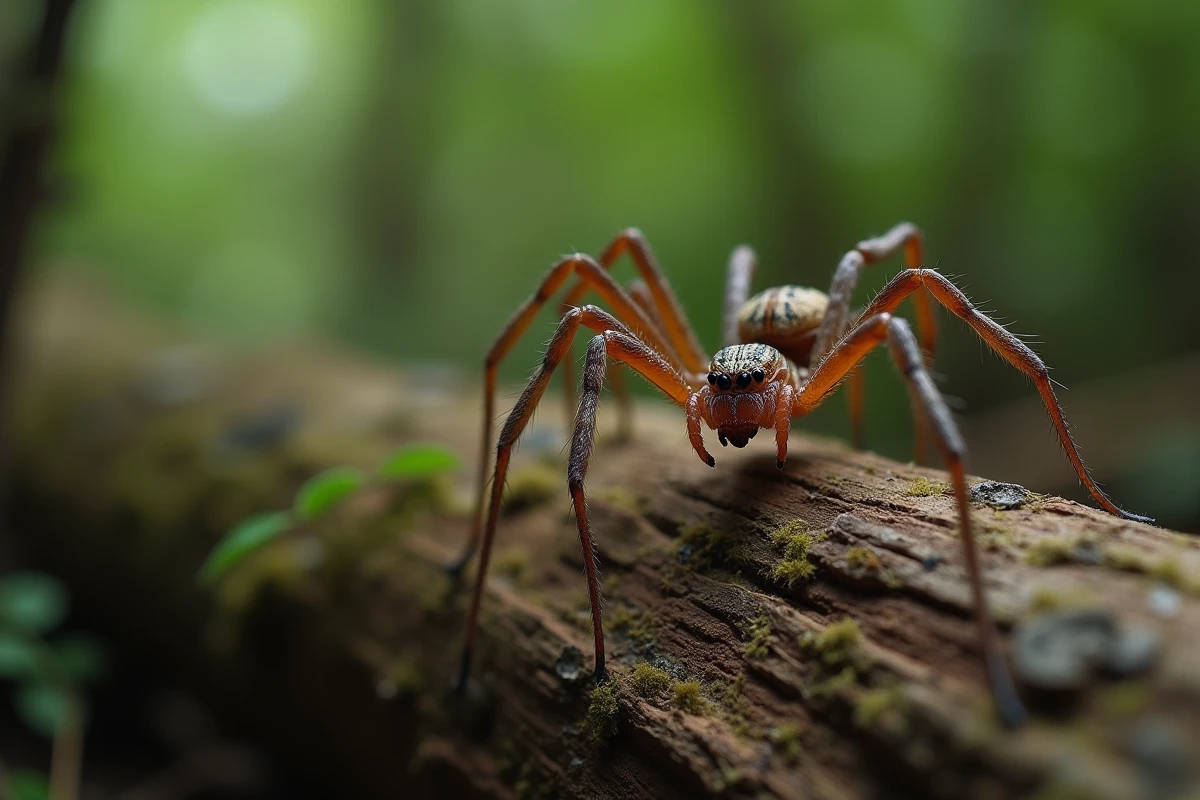
The solifuge poorly bears its nickname of knife spider. It is not a spider, it produces no venom, and its reputation as a desert terror is based on a series of persistent misunderstandings. The animal belongs to the order Solifugae, a group of arachnids distinct from classic spiders, scorpions, and ticks. Understanding what makes it unique requires looking beyond the spectacular videos circulating online.
Solifuge Chelicerae: An Unmatched Hunting Tool Among Arachnids
Have you ever seen a scissor-like claw? The chelicerae of the solifuge operate on a similar principle. Two vertical blades, facing forward, capable of slicing through the cuticle of a beetle or crushing a small lizard.
These mouthparts are proportionally the largest of all arachnids. They sometimes occupy a third of the body length. Each chelicera consists of two segments that close against each other, like scissors, with enough force to pierce thick exoskeletons.
The takeaway: the solifuge hunts solely through the mechanical force of its jaws. No venom, no web, no trap. The prey is seized, held, and then cut up on the spot. To learn everything about the knife spider, one must start from this raw mechanics that distinguishes it from almost all other predators of its size.
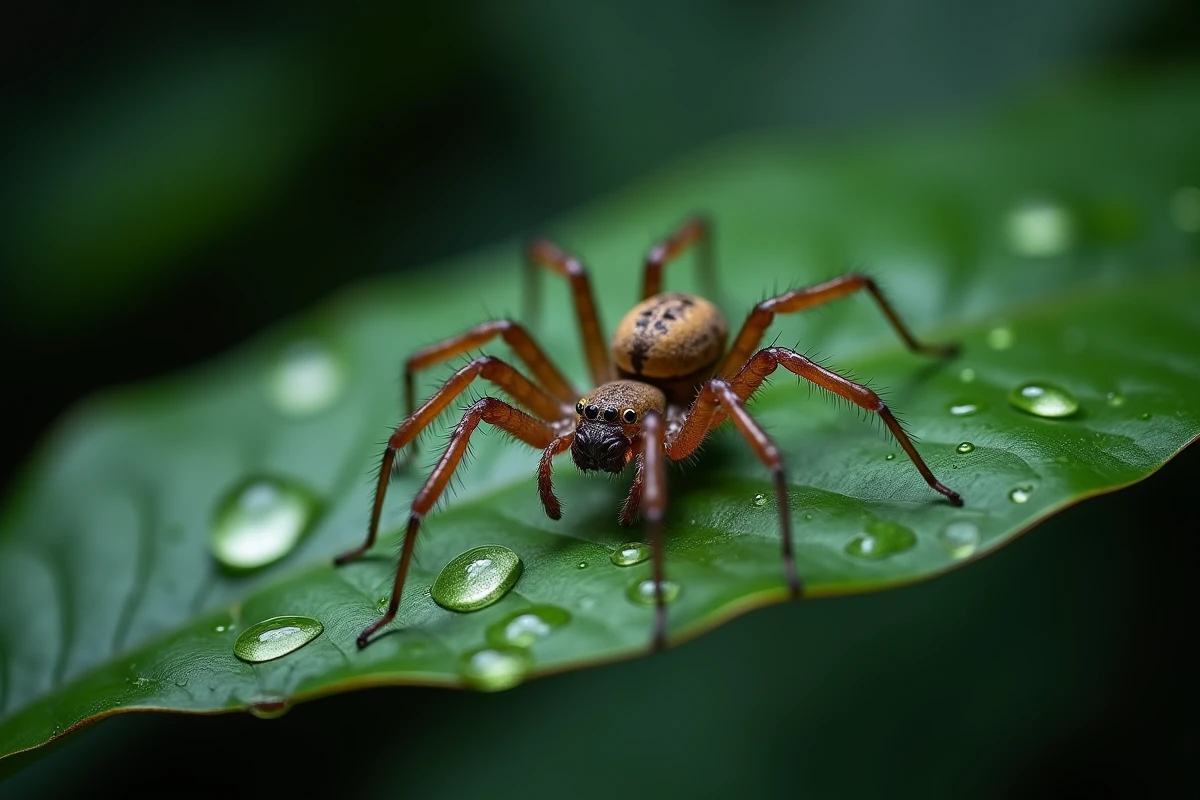
Solifuge Hunting Technique: Waiting, Probing, and Brief Sprint
The popular image shows an animal darting at full speed across the sand. The reality documented by infrared observations is more subtle.
Three Distinct Phases Before Capture
Research conducted with infrared cameras in deserts of the Middle East and Southern Africa revealed a three-part hunting pattern:
- A stationary waiting phase, sometimes lengthy, where the solifuge remains crouched against the ground or under a rock. It does not run constantly.
- A probing phase: the pedipalps (the two appendages located in front of the legs) tap the substrate to detect vibrations from a nearby prey. This tactile probing behavior has been little described in popular literature.
- A very short chase, rarely beyond a few meters, which ends with a direct grab using the chelicerae.
The solifuge alternates between waiting and brief pursuit rather than running continuously. Activity is mainly concentrated at dawn and dusk, not in full sunlight despite the Latin name Solifugae (which literally means “those who flee the sun”).
Why This Strategy Works
A predator that runs non-stop expends too much energy for the arid environment it inhabits. The waiting-probing-sprint alternation allows for conserving water reserves. The pedipalps serve as advanced detectors, preventing unnecessary chases towards a rock or a leaf.
Knife Spider and Taxonomy: Why Confusions Persist
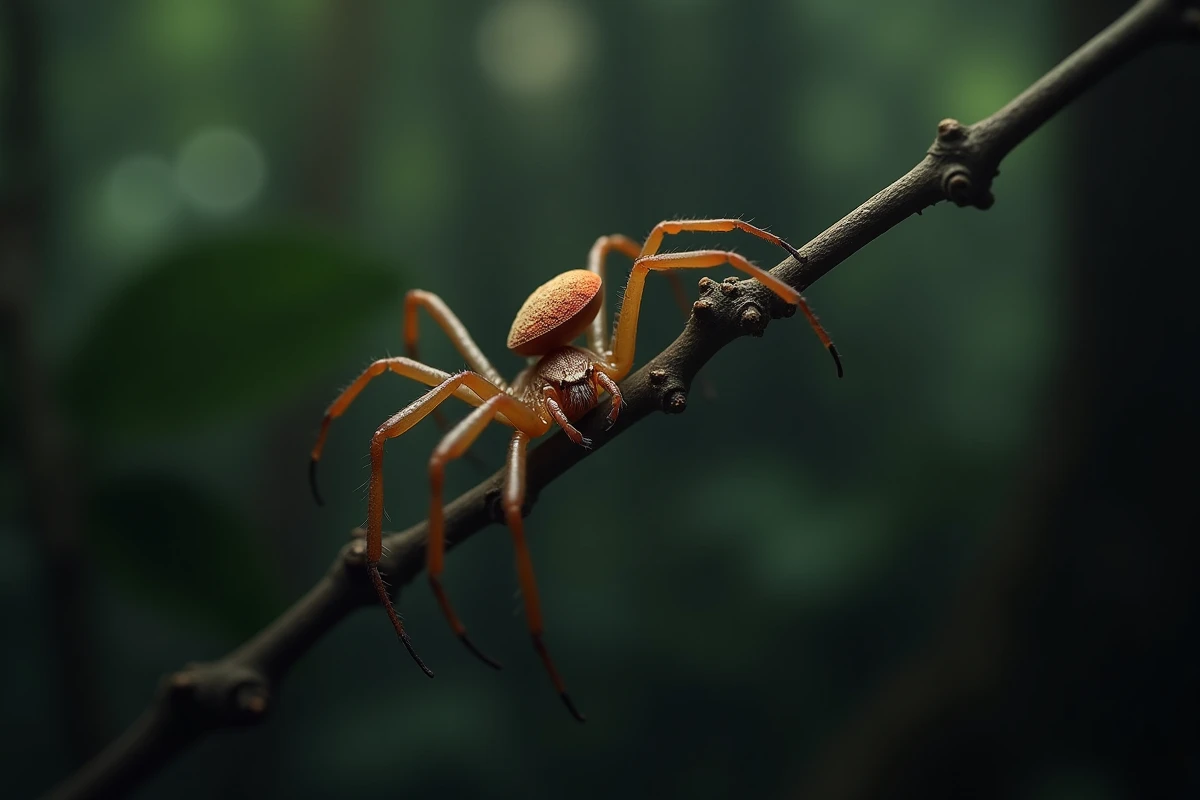
The term “knife spider” circulates on networks without a stable definition. Some sites apply it to solifuges (order Solifugae), while others refer to Heteropoda venatoria, a hunting spider from the Sparassidae family. These two animals have almost nothing in common biologically.
Solifuges are not spiders in the taxonomic sense. They form a distinct order, just like scorpions or harvestmen. They do not produce silk, do not spin webs, and do not possess venom glands.
Since 2020, several taxonomic revisions have clarified the classification within Solifugae. Genera like Galeodes and Rhagodes, long treated as catch-alls, have been redefined into distinct entities through morphological and genetic analyses. The World Solifugae Catalog, updated in 2023, lists over 1,000 described species in this order.
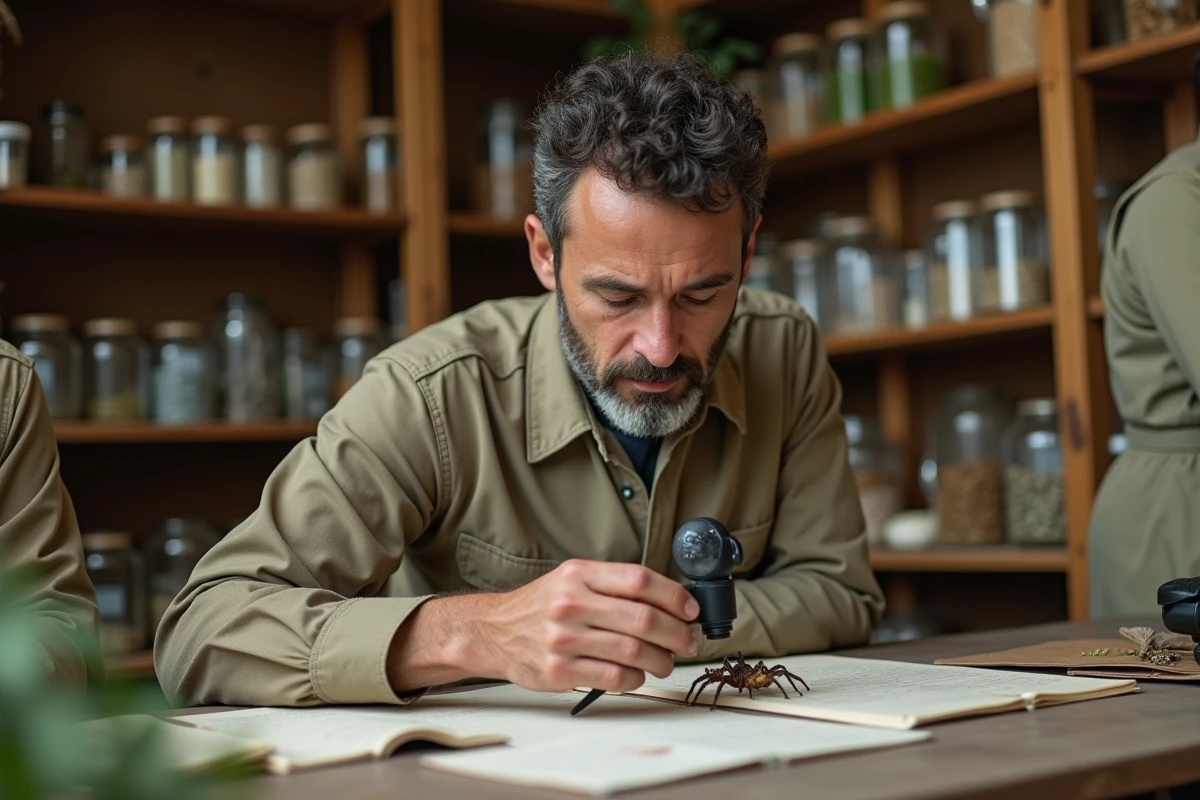
The problem for the general public: many photos online are misidentified. A Sahara solifuge and a Nevada solifuge may look alike but belong to different families. Without examining the chelicerae and pedipalps under a microscope, identification remains uncertain.
Solifuge and Danger to Humans: What Biology Says
The bite of a solifuge can be painful. The chelicerae are strong enough to break the human skin. A secondary infection is possible if the wound is not cleaned.
However, no solifuge possesses venom glands. The risk is limited to a mechanical injury comparable to a clean cut. No hospitalization related to solifuge envenomation has been documented in the medical literature.
Persistent legends partly stem from American soldiers stationed in the Middle East, who photographed large solifuges and spread images often distorted by perspective. The animal, attracted by the shadow of humans (it flees the sun, let’s remember), seemed to chase them, which fueled the myth of an aggressive predator towards people.
Ecological Role of Solifuges in Arid Environments
In a desert ecosystem, solifuges occupy an intermediate predator position. They regulate populations of insects, small arthropods, and sometimes young lizards.
Their local disappearance can lead to a proliferation of pests in agricultural areas bordering the desert. Solifuges also participate in the food chain by serving as prey for nocturnal raptors, foxes, and certain reptiles.
Their presence indicates a functional arid ecosystem, with enough micro-fauna to support an active predator. Recent research also highlights that some species could serve as bio-indicators to assess the health of semi-arid environments, although this field of study remains exploratory.
The knife spider, despite its misleading name, deserves a look free from fantasies. An arachnid without venom, with formidable jaws and a hunting strategy far more refined than simple straight-line running: this is what biology retains about the solifuge.